Why Local Landscapers are Losing Jobs to Out-of-Town Crews
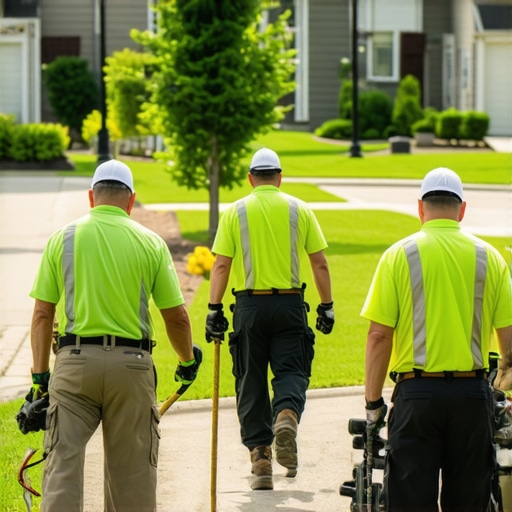
You’re a landscaper in Garland, Texas. You’ve lived here for twenty years, you pay your local taxes, and your shop is right off Miller Road. Yet, as you’re driving to a consultation near Firewheel Town Center, you see it: a shiny truck from a competitor based in Plano or Richardson parked in your neighbor’s driveway. They’re unloading sod, installing irrigation, and taking the profit that should have been yours. It’s the “Out-of-Town Truck” syndrome, and it’s a plague on local service businesses.
As I often tell my clients at Online Ownership, proximity is no longer the sole king of local search. If you think that just because your physical office is closer to the customer, you’ll automatically appear at the top of the Google Map Pack, you are operating on outdated information. The reality is that the digital landscape has shifted. The “Map Pack” – those three coveted spots at the top of a Google search – is no longer a simple directory based on zip codes. It is a sophisticated, AI-driven ranking engine that prioritizes authority over geography.
If you are wondering Why your service area business is invisible to customers five miles away, you need to understand that Google isn’t just looking for the closest business; it’s looking for the best business to solve the user’s specific problem. In this deep dive, we’re going to peel back the curtain on the mechanics of local ranking and show you exactly how those out-of-town crews are jumping the fence into your territory.
Section 1: The Three Pillars of Local Ranking
To understand why a Plano crew is outranking you in Garland, we have to look at the three core pillars of the Google local algorithm: Proximity, Relevance, and Prominence. These aren’t just buzzwords; they are the mathematical weights that determine who gets the lead and who gets buried on page two.
Research from Rocket Clicks and other industry leaders shows that while proximity is a “dominant” factor, it is often the most volatile. Proximity is the distance between the searcher and your business. However, the algorithm is designed to balance this against the other two pillars. If a competitor has significantly higher relevance and prominence, Google will happily ignore a ten-mile distance gap to provide the user with a “better” result.
When we talk about the google maps ranking system, we have to look at how these pillars interact. Proximity is your “home field advantage,” but if your digital presence is weak, you’re playing with a depleted roster. Relevance is how well your business profile matches what the user is looking for. If someone searches for “xeriscaping in Garland” and your profile only says “landscaping,” you’ve lost the relevance battle. Prominence, on the other hand, is how well-known your business is. Google measures this through your web presence, links, and review signals. If the out-of-town crew has a massive digital footprint and you have a ghost town of a website, their prominence will override your proximity every single time.
Section 2: Why “Closest” Doesn’t Always Mean “First”
There is a persistent “Proximity Myth” in the landscaping industry. Many owners believe that if they are the closest pin on the map to the searcher, they should be #1. But recent data and Reddit-based research into hyper-local search patterns reveal a different story. For generic searches like “landscaper near me,” proximity carries heavy weight. However, as soon as the search becomes specific, the “Relevance Gap” allows outsiders to swoop in.
Let’s look at a specific example. Imagine a homeowner in Garland needs a complex drainage solution because their backyard floods every time we get a North Texas thunderstorm. They search for “French drain installation Garland.”
- The Local Guy: Has a Google Business Profile (GBP) titled “Garland Landscaping.” His primary category is “Landscaper.” He has no mentions of drainage on his profile.
- The Out-of-Town Competitor: Based in Richardson. His GBP is optimized with secondary categories like “Drainage Service” and “Landscape Designer.” He has uploaded twenty photos of finished French drain projects and has several reviews mentioning “drainage” and “flooding.”
In this scenario, Google’s AI determines that the Richardson competitor is more “Relevant” to the specific problem of a flooded yard. The algorithm would rather send the user to an expert five miles further away than a generalist who happens to be around the corner. This is why choosing the right 4 Google Business Profile categories that actually move the needle for Garland shops is critical. If you aren’t telling Google exactly what you do, you’re giving your neighbors’ jobs to the guy from the next town over.
Section 3: The Prominence Gap, Reviews, and Authority
The third pillar, Prominence, is where most local landscapers fail. Prominence is essentially Google’s “fame” metric. It’s a reflection of how much the internet talks about you. Google explicitly states in their Business Profile Help documentation: “More reviews and positive ratings can help your business’s local ranking.” But it goes deeper than just a star rating.
Google looks at the volume, frequency, and quality of your reviews, as well as your overall digital authority. If an out-of-town crew has 150 5-star reviews with detailed descriptions and photos, and they’ve been mentioned in local news articles or have high-quality backlinks from gardening blogs, they have high prominence. If you only have 5 reviews and no digital footprint, Google views you as a “risk.” They don’t want to recommend a business that might not be reliable, even if they are physically closer.
To compete, you need to use professional local seo ranking tools to see where you stand. Are your competitors getting reviews every week while yours are two years old? Are they mentioned on local chamber of commerce sites? Prominence is an arms race. If you aren’t building authority, you are retreating. An out-of-town crew with a seasoned, high-authority profile will consistently beat a local crew that treats their Google Business Profile like a “set it and forget it” yellow pages ad.
Section 4: The 2026 AI Search Shift
We are currently entering a new era of search dominated by SGE (Search Generative Experience) and Gemini. By 2026, the traditional map pack will be even more integrated with AI-driven “Entity” data. Google is no longer just looking at keywords; it’s looking for proof of life. It wants to see that your business is an active “Entity” that actually operates in Garland.
AI looks for geo-tagged content. When you finish a job in the Buckingham area of Garland, are you taking a photo and uploading it to your profile with a caption about the local soil? If not, you’re missing out on vital “Entity” signals. AI search models are designed to filter out businesses that look “thin” or “automated.” This is Why Garland AI search 2026 is filtering your map pin. If your data is messy – meaning your Name, Address, and Phone number (NAP) are inconsistent across the web – AI will lose trust in your business entity and favor the competitor with “clean” data.
In the 2026 landscape, “messy data” is a death sentence. The out-of-town crews that are winning are the ones who have invested in clean data structures and consistent local signals. They are proving to the AI that they are the most reliable option for Garland residents, regardless of where their truck is parked at night.
Section 5: Practical Fixes to Reclaim Your Neighborhood
You don’t have to sit back and watch out-of-town crews take your leads. You can reclaim your local dominance by following a strategic checklist designed to maximize your Proximity, Relevance, and Prominence.
- Audit Your Categories: Don’t just settle for “Landscaper.” Use the secondary category slots to list every specific service you offer, from “Sod Supplier” to “Sprinkler Repair Service.”
- Data Gap Analysis: Use a google business profile audit tool to identify where your profile is lacking compared to the competitors who are outranking you. Look for missing attributes, such as “Identify as Black-owned” or “Veteran-led,” and ensure your hours and service areas are precise.
- Hyper-Local Content: Start a blog or update your GBP posts with content specifically for Garland. Discuss the clay-heavy soil in North Texas, the best grass types for the Garland climate, or how to prep a lawn for a Texas summer. This builds “Relevance” and “Entity” authority.
- Review Velocity: Implement a system to ask for reviews immediately after a job is finished. A steady stream of new reviews is a powerful “Prominence” signal that tells Google you are active and trusted.
Conclusion & CTA
Local dominance is not an accident; it is a choice. You can either let the “next town over” continue to siphon off your leads, or you can optimize your digital presence to become the undeniable authority in Garland. Proximity is a starting point, but Relevance and Prominence are how you win the game. By cleaning up your data, focusing on hyper-local content, and proving your authority through reviews, you can push those out-of-town trucks back across the city line.
Don’t wait for your phone to stop ringing. Use SEO Viper Tools today to track your progress, audit your profile, and start outranking the competition. It’s time to take back your territory.